
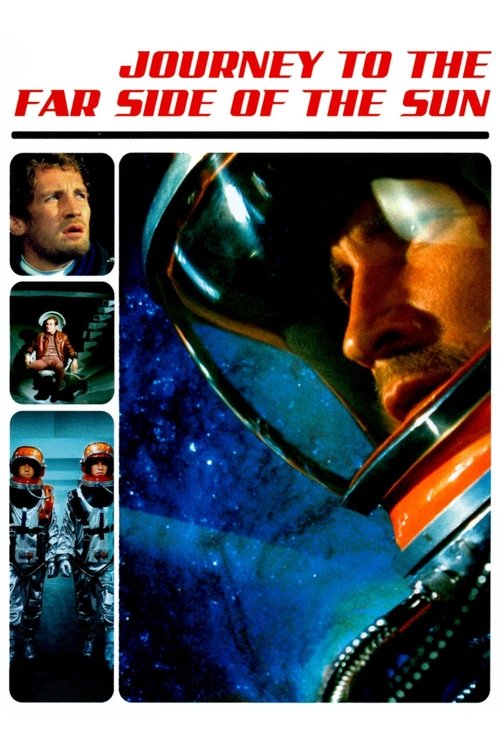
Doppelgänger (1969)
Directed by Robert Parrish
A planet is discovered in the same orbit as Earth's but is located on the exact opposite side of the sun, making it not visible from Earth. The European Space Exploration Council decide to send American astronaut Glenn Ross and British scientist John Kane via spaceship to explore the other planet.
3 connections found
View:
3 connections, in both directions
What critics compared Doppelgänger to



The third is the discovery by space explorers of another world where we meet our doubles: this is what happens in a mysterious fashion in Kubrick's 2001: A Space Odyssey and Tarkovsky's Solaris and more explicitly in Journey to the Far Side of the Sun (aka Doppelgänger), the 1969 venture into live-action film‑making by the Thunderbirds team.
Rhoda and the audience learn about this "mirror Earth" via the patter of a hip-hop deejay on a car radio; this is a beautiful example of the film's recurring success in conveying important information in believably mundane ways, without the need for science-fiction special effects or sequences with scientists or feds, as one might find in a studio film: I'm thinking in particlar of 1969's "Journey to the Far Side of the Sun," a more traditional if admirably "Twilight Zone"-esque science-fiction film about the discovery of a duplicate Earth.
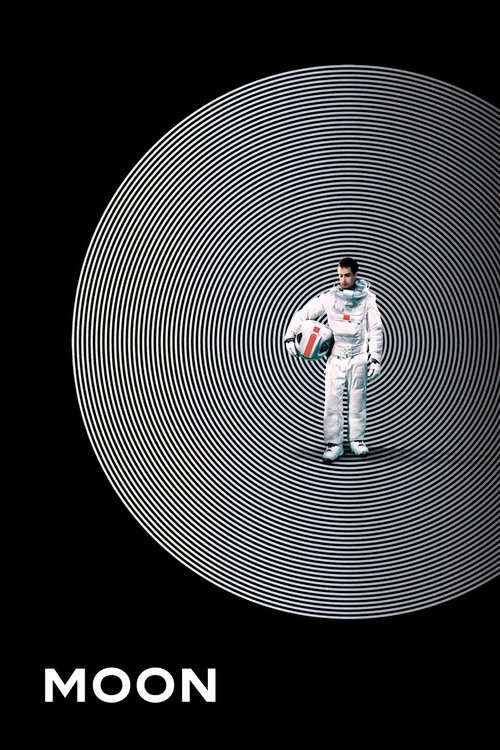
The premise is at once existential and scientific, and may remind genre aficionados of certain "Twilight Zone" episodes and the 1969 film, "Journey to the Far Side of the Sun."

Connoisseurs of vintage sci-fi might also cite Invasion of the Body Snatchers, the original Solaris and the cult British space shocker Journey to the Far Side of the Sun (aka Doppelganger).