
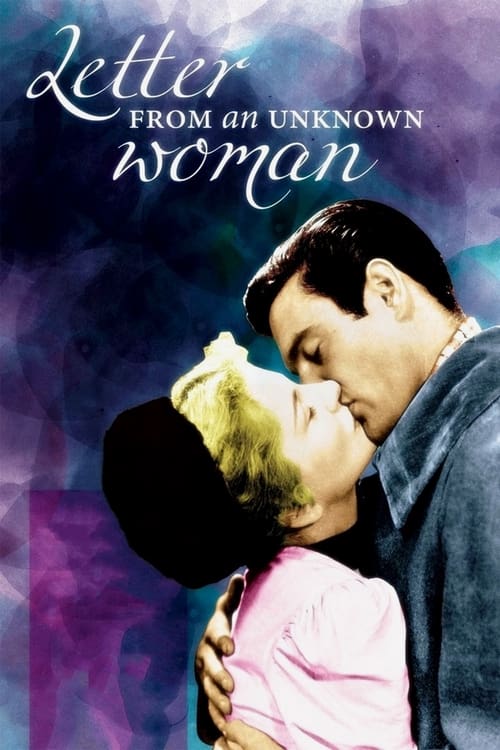
Letter from an Unknown Woman (1948)
Directed by Max Ophüls
A pianist about to flee from a duel receives a letter from a woman he cannot remember. As she tells the story of her lifelong love for him, he is forced to reinterpret his own past.
2 connections found
View:
2 connections, in both directions
What critics compared Letter from an Unknown Woman to


Not unlike Max Ophüls' Letter from an Unknown Woman (1948) the grounding of this storytelling function within the female character has significant, explicitly critical, effects.

Just as great is Ophuls’ adaptation of Zweig’s novella “Letter From an Unknown Woman,” which contains a sequence that shames the artifice of “The Grand Budapest Hotel.”
In terms of movie history, he wrote the novella that led to Max Ophuls’ Letter from an Unknown Woman (1948).
The Max Ophuls film of Zweig’s “Letter from an Unknown Woman” is one of the great triumphs of sentimental 1940s period piece production design, just as “Budapest” is the greatest expression of Anderson’s love of ornate buildings, old money, older furniture, tiny models and modish, saturated colors.